
Find the Right Tires for Your Subaru
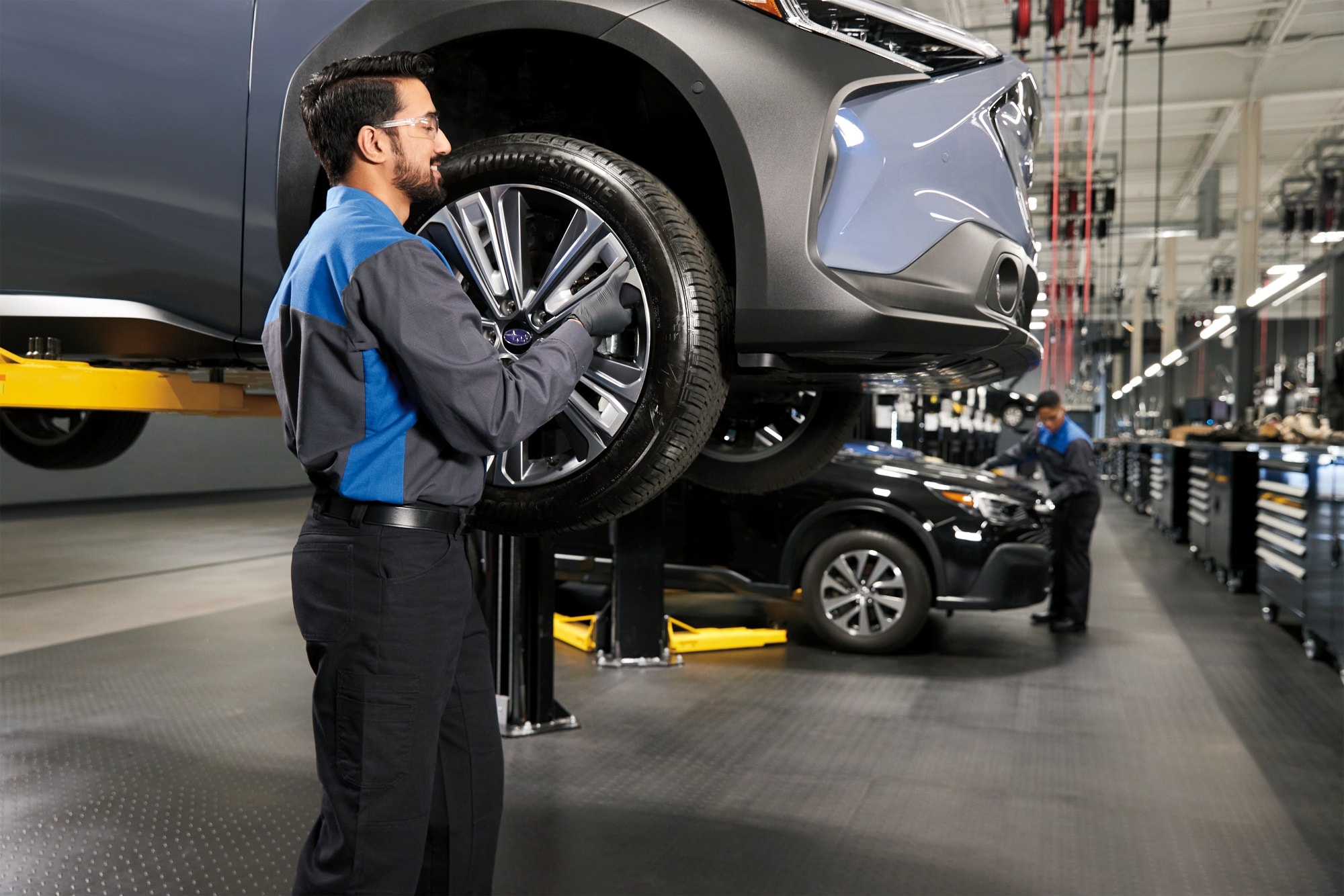
When it comes to routine tire services and repairs, you can count on the experts in our Subaru Tire Center to provide great advice and a host of valuable services to keep your vehicle running as it should. Tires are an important vehicle component and need continuous care and upkeep. Our Tire Center offers high-quality tires and services to keep your vehicle up to date.
Hours
- Monday - Friday7:30am - 6:00pm
- Saturday - SundayClosed
The Importance of Routine Tire Maintenance
Tire maintenance is critical to ensuring your safety and good performance on the road. Routine maintenance typically involves tire services throughout a vehicle's lifespan. You can expect to rotate your tires each time you get your oil changed. Other less frequent services like wheel alignments, balancing, and tire replacements occur after a significant event or at the manufacturer's recommended mileage.
Subaru 24-Month Tire Protection Plan
No matter which type of tire you purchase from us, you're covered with our complimentary 24-month Tire Protection Plan-so you can drive with confidence. It's free with any tire purchase and covers a range of incidents to protect your finances from unexpected blowouts or other issues you may encounter with your new tires during the coverage period.
- 24-Month Tire Protection
- Tire Replacements or Repairs
- Complimentary Roadside Assistance
- Choose Any Authorized Subaru Dealership
Important Routine Tire Services
Keeping your Subaru performing at its best starts from the ground up. Routine tire services are essential for maintaining safety, fuel efficiency, prolonging wear and overall driving comfort. At our Subaru Tire Center, our certified technicians offer expert inspections, rotations, alignments, replacements, and more, tailored to your vehicle's needs, helping you drive with confidence no matter the road ahead.
Tire Rotations
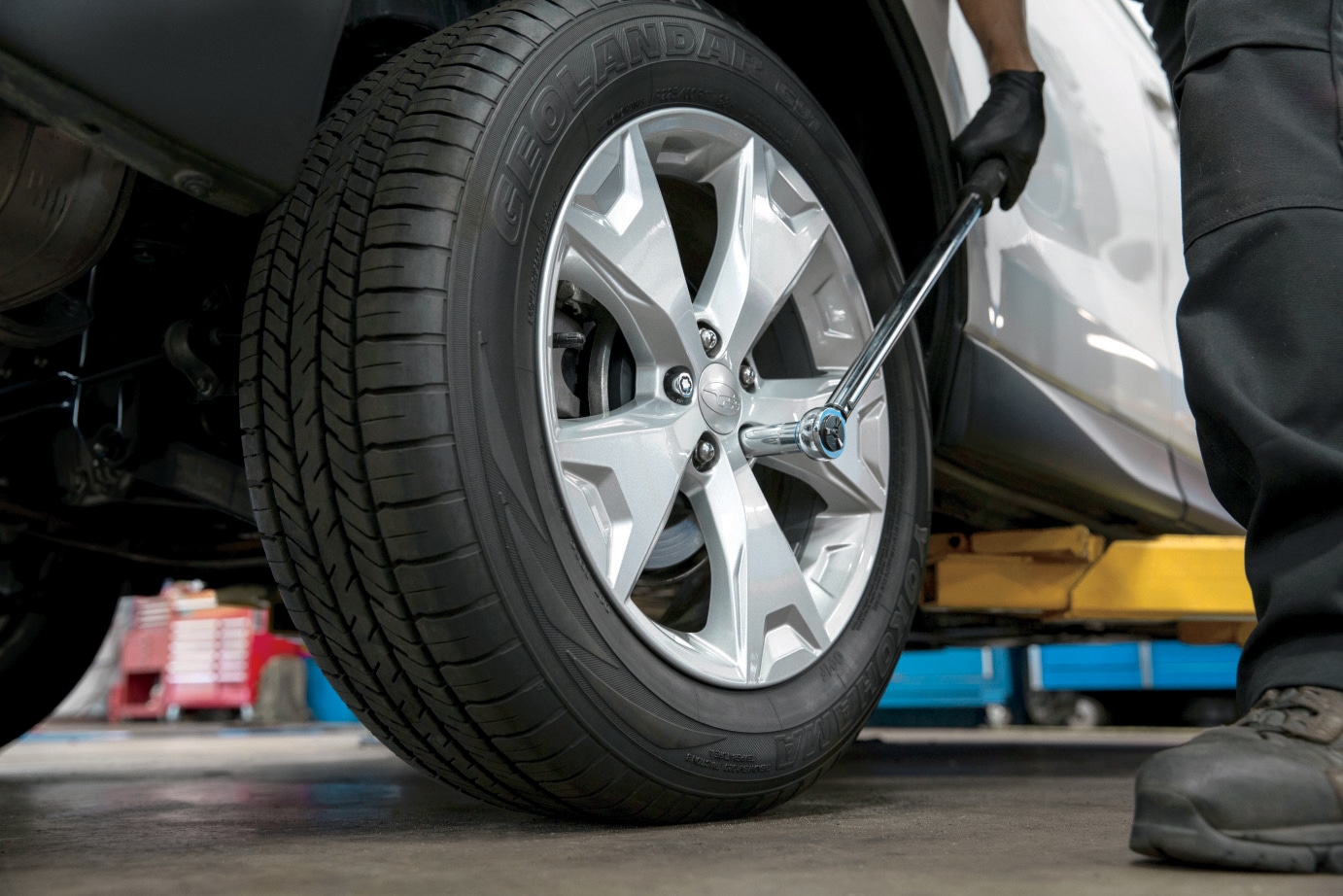
Tire rotations are essential maintenance for your vehicle that help ensure the tread wears evenly. A typical tire rotation involves moving the tires from one wheel to another. The pattern of the rotation depends on the model and tire design. When the tires are allowed to wear evenly with regular tire rotations, it can help them last longer and ensure proper handling.
Wheel Alignments
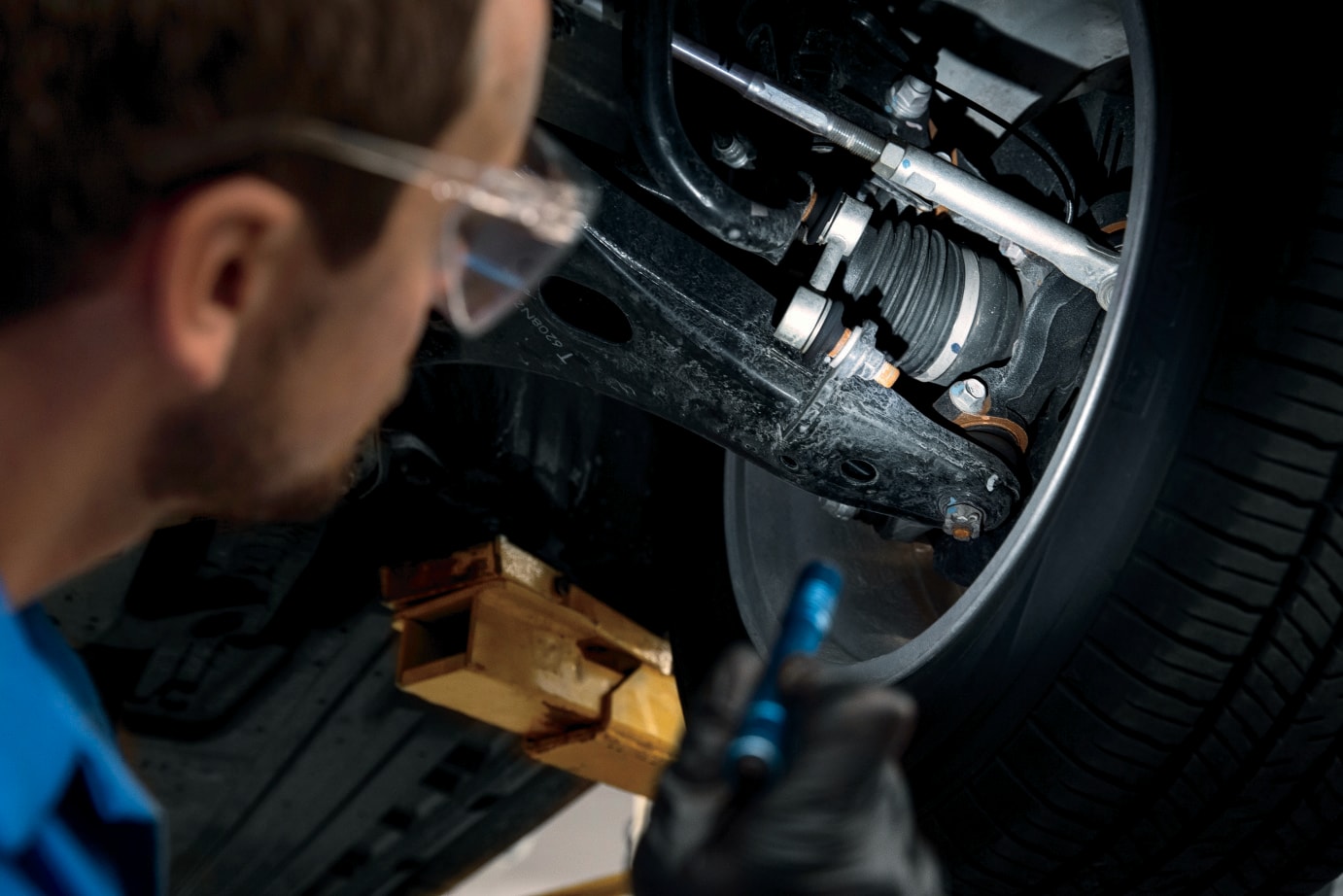
Wheel alignments are a key part of vehicle maintenance that help ensure your tires meet the road at the correct angle. During an alignment, a technician adjusts the angles of the wheels-typically camber, caster, and toe-to match the manufacturer's specifications. Proper alignment helps prevent uneven tire wear, improves steering response, and supports overall vehicle stability. Regular wheel alignments can extend the life of your tires and enhance driving safety.
Tire Balancing
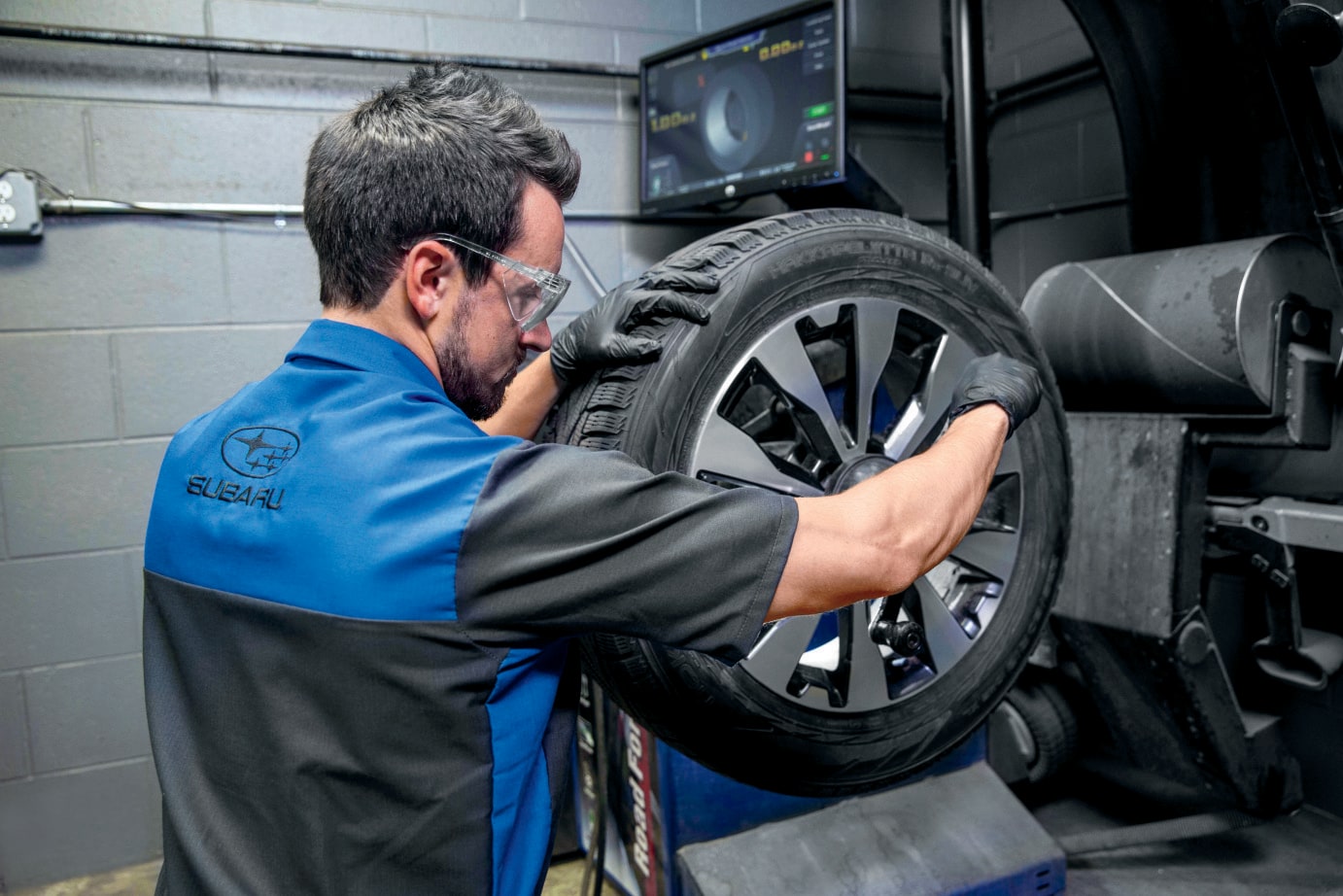
Tire balancing is a service that ensures weight is evenly distributed around the entire circumference of each tire and wheel assembly. Our technicians perform this service by placing small weights on the rim to correct any imbalance. Properly balanced tires help reduce vibrations, promote even tread wear, and contribute to a smoother ride. Routine tire balancing can improve vehicle performance and prevent premature wear on suspension components.
Tire Pressure Monitoring
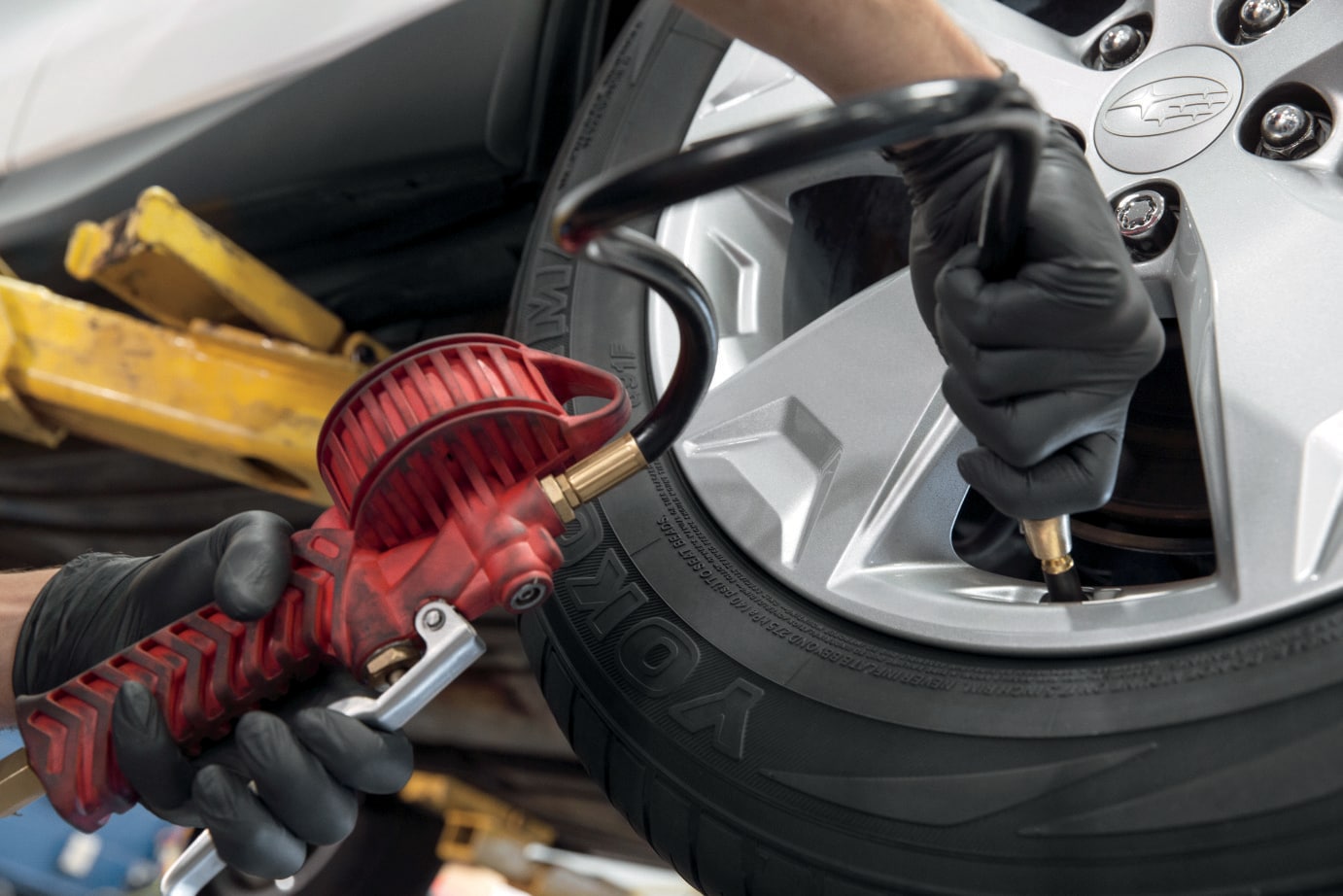
Tire pressure monitoring is essential for maintaining optimal tire performance and safety. Most modern vehicles are equipped with a Tire Pressure Monitoring System (TPMS) that alerts drivers when tire pressure falls below recommended levels. Keeping tires properly inflated helps improve fuel efficiency, ensures better handling, and reduces the risk of blowouts. Regularly checking and maintaining tire pressure supports even tread wear and extends the life of your tires.
Tire Pressure Monitoring System Warning Light
The Tire Pressure Monitoring System keeps tabs on all four tires with tire pressure sensors on each tire. The TPMS warning light on the dashboard will alert you to potential problems with a solid or flashing light. Here's what they mean and what to do when it comes on:
Solid TPMS Light: One or more of the tires have low air pressure. Check all the tires with a pressure gauge and refill to the PSI listed on the door jamb.Flashing TPMS Light: There is an issue with the pressure monitoring system itself. Contact our Service Center so our technicians can scan the system with diagnostic tools and determine the cause and fix for the malfunction.
Recognizing Tire Damage & Repair Options
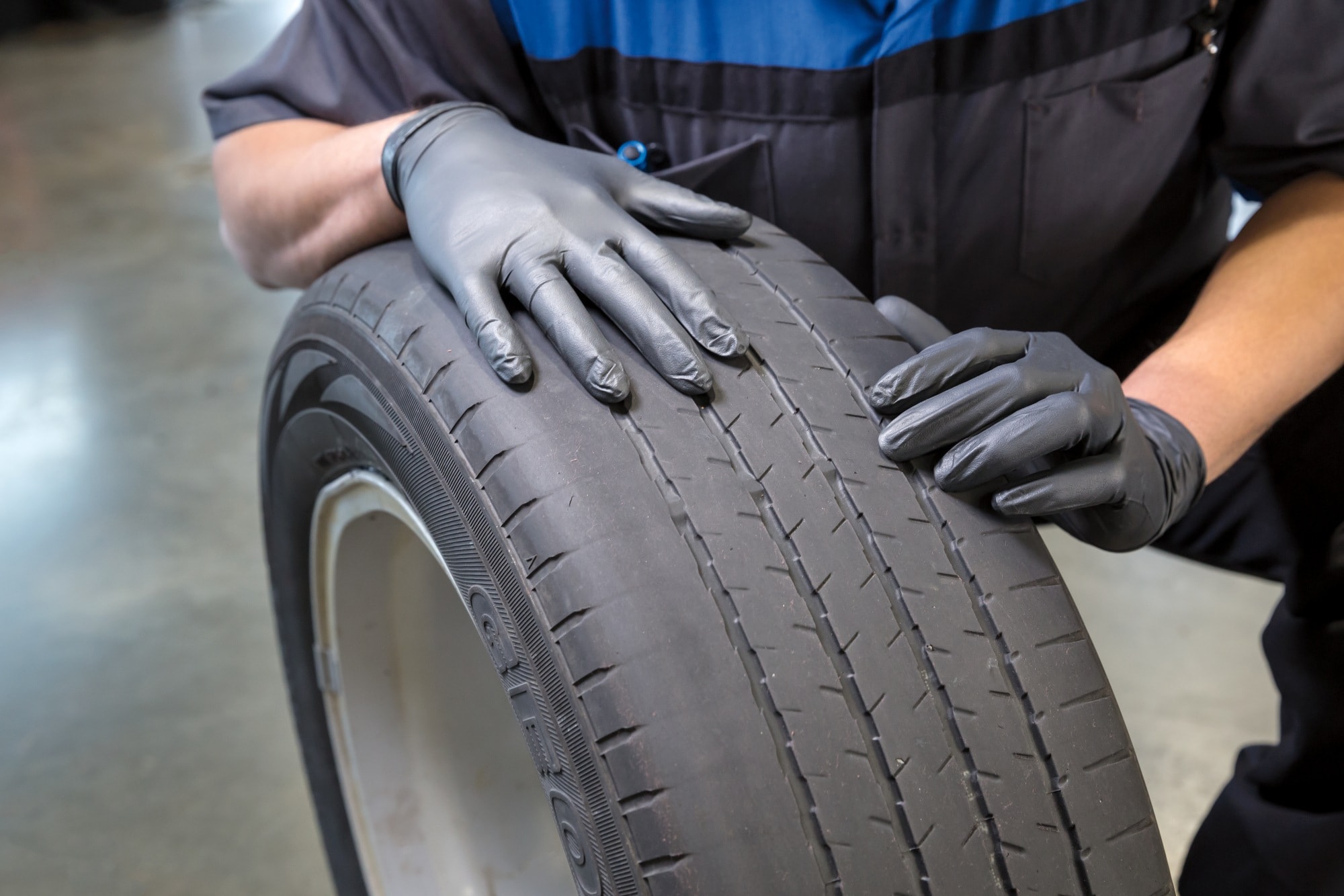
Uneven tread wear, bulges, or visible cracks can signal tire damage. Tread wear patterns, like cupping or inner-edge wear, often point to alignment or suspension issues. Driving on a flat tire can cause damage to the rims or make it impossible to repair with a simple patch. Common tire repairs include patches for small punctures and some larger punctures. Patch repairs can restore safety and extend tire life when done professionally. When you notice unusual wear or damage, schedule a tire inspection as soon as possible and avoid driving with a flat or damaged tire. If your vehicle has a locking lug nut for theft prevention, please bring your lock key to ensure a smooth service experience.
In the event you experience a blowout or one of the tires has severe damage, you can call roadside assistance or replace the tire with the spare. Most Subaru vehicles have a spare tire in the trunk area beneath the cargo floor with an emergency jack, or mounted underneath the rear of the vehicle. You can remove a mounted spare tire under the vehicle with the provided tools in the cargo area. A spare tire is a temporary solution to help you get to the dealership safely, and you should not drive with a spare for more than 50 miles.
Certain Subaru models-such as select WRX, Forester Hybrid, and Solterra-are equipped with a tire repair kit instead of a traditional spare tire. These kits typically include a sealant and an air compressor, offering a temporary solution to get you back on the road. However, they are not a replacement for professional tire repair or replacement.
Repairable vs. Non-Repairable Damage
At your tire service appointment, our certified Subaru technicians will determine the severity of the damage and whether they can perform a repair or a full replacement. Repairs like patches are significantly less expensive than a tire replacement. Additionally, Subaru recommends changing all four tires when the remaining tires have less than 6/32nds wear remaining and the damaged one is beyond repair. The symmetrical all-wheel drive system in Subaru vehicles relies on all four tires being the same diameter for even power distribution and proper handling or traction.
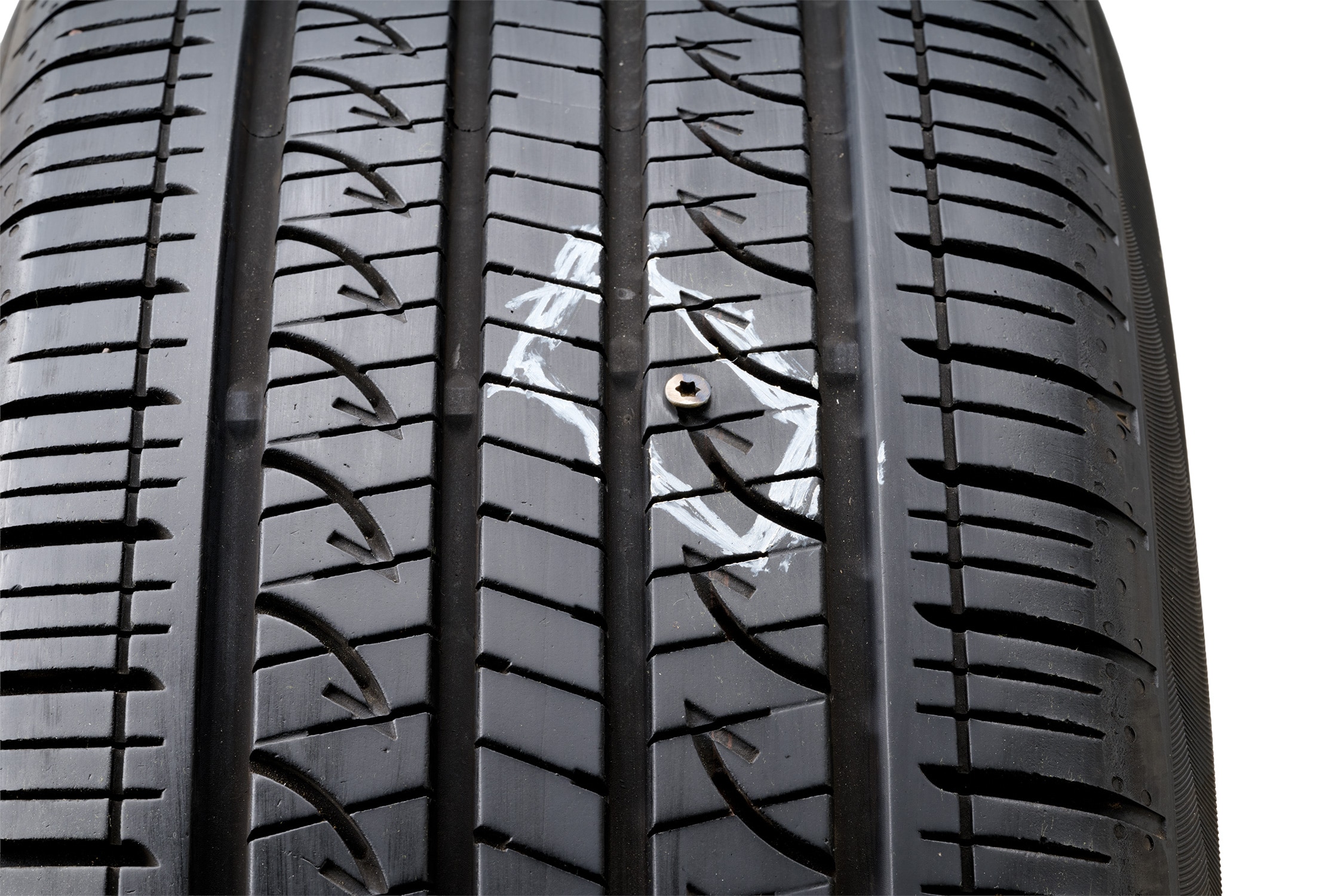
Repairable Damage
Tire repairs with patches are possible depending on the type and location of the damage:
- A single puncture - multiple punctures can compromise the integrity of the tire
- At least one inch away from the sidewall
- A clean puncture with no tearing or jagged edges
- Holes less than ¼ inch in diameter
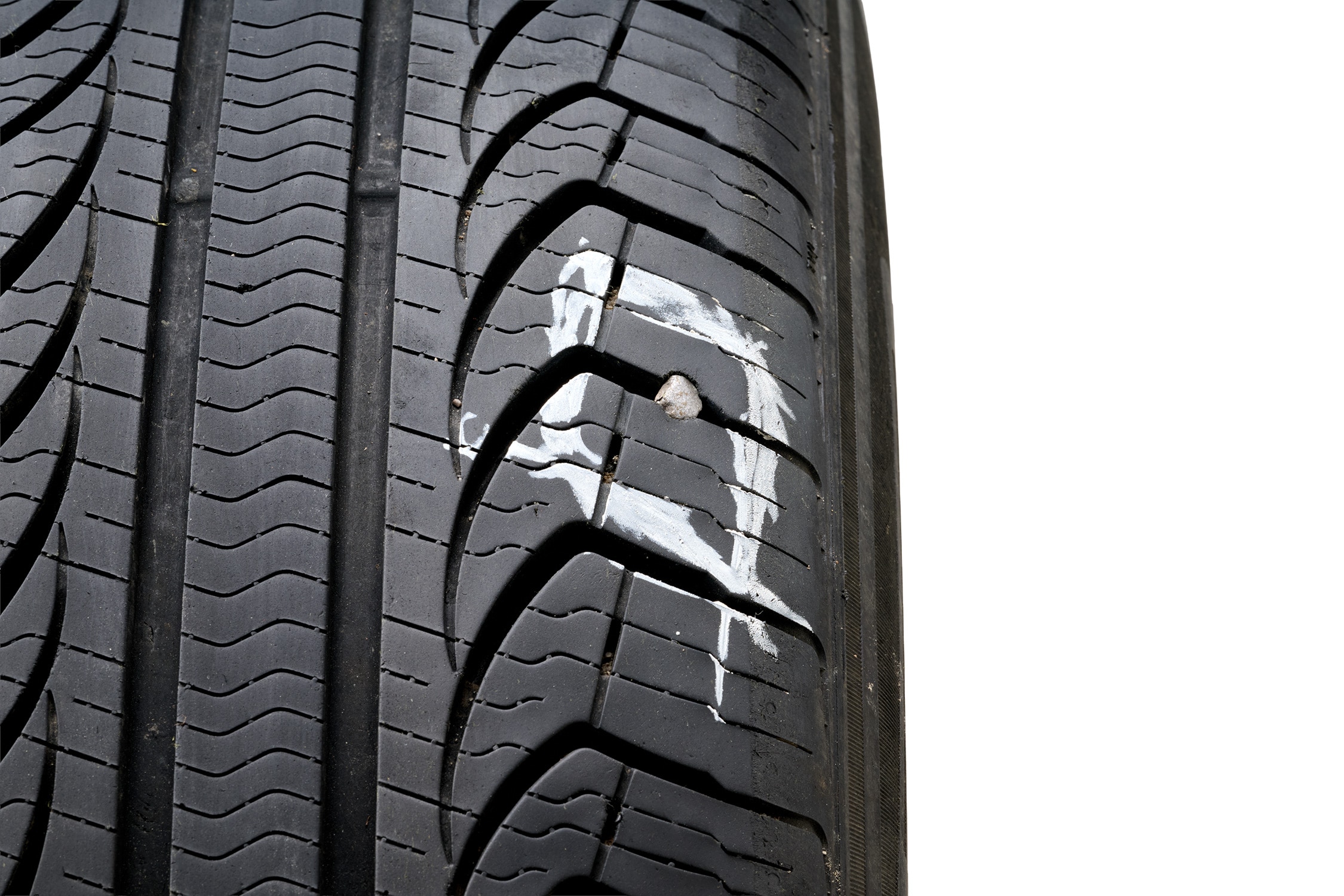
Non-Repairable Damage
If our certified Subaru technicians cannot repair the damage, they can provide tire replacements instead. The following types of tire damage are not repairable:
- Damage to the sidewall
- Large or irregular punctures
- Tread separation or deep cuts
- Run-flat or driven-flat - driving too long on a flat tire
Knowing how to spot tire damage early can help prevent costly repairs and keep you safe on the road. Here are some important things to look for:
- Bulges or bubbles on the sidewall (the flat side of the tire that faces outward)
- Cracks in the rubber
- Visible cables (thin metal wires inside the tire structure)
- Low or uneven tread wear
- Inner or outer edge wear (shoulder): Possible misalignment or worn suspension
- Center wear: Overinflated tires
- Cupping or scalloping: Suspension or shock absorber issues
- Feathering: Improper toe alignment
- Use a tread depth gauge or the penny test (insert a penny into the tread with Lincoln’s head down; If you see all of Lincoln's head, it’s time to replace the tire).
- Inspect both the inside and outside edges of each tire for uneven wear.
- Look for cables sticking out of the rubber, which indicate severe damage and require immediate replacement.
- Plug: Plugging a tire only fills the puncture from the outside and doesn’t seal the inner liner. For a safe, lasting fix, a patch applied from the inside is the only professionally accepted method.
- Patch: Covers larger punctures; often combined with a plug for added security.
When Is It Time To Replace My Tires?
Tires wear naturally over time and need continuous monitoring to ensure they remain safe and effective. Since the time it takes for tires to wear depends on many factors, including weather, road conditions, and even your driving habits, it's important to check the tire condition frequently and replace the tires when the tread wears below the recommended levels, if there is damage, or if there are other special conditions that require additional attention.
Tread Wear
Subaru recommends tire replacements when the tread is low or when the tread wear is significantly uneven across all four tires to protect your all-wheel drive system:
- Replace tires when tread depth falls below 3/32". If you often drive in wet or snowy conditions, earlier replacement around 6/32" may be recommended to help maintain safe traction, though this can vary depending on specific driving needs.
- Consider tire shaving to match tread depth when replacing a single tire, as advised by certified Subaru technicians
Damage
We will recommend a tire replacement when there is irreparable damage:
- Multiple punctures
- Holes in the sidewall
- Tears
- Bulges
- Bubbling
- Cracks
- Exposed belts or cords
Other Conditions
Outside of tread wear or damage, here are some other reasons that might require a tire replacement:
- Tire age (maximum of 10 years old) or mileage
- Tires constantly need refilling (tire pressure issues)
- Irregular tread wear
- Manufacturer's recall
- Appearance (personal preference)
Tread Depth vs. Stopping Distance: What You Need to Know
Worn tread means longer stops especially on wet pavement. See how tread depth affects braking and why it matters for your safety.
Choosing the Right Tires
Selecting the right tires for your Subaru is about more than just size - it's about matching your driving habits, climate conditions, and performance expectations. Whether you need all-season versatility, winter traction, or high-performance handling, our experts are here to guide you through the options that best suit your vehicle and lifestyle. With access to trusted tire brands and Subaru-specific recommendations, we make it easy to choose tires that deliver safety, durability, and a smooth ride every time.
We carry a large selection of top tire brands in all sizes at our Tire Center, ensuring you have access to the right tires for your vehicle. Our genuine Subaru tire replacements come in different styles and formulations to tackle typical conditions for drivers in our area and their favorite seasonal activities.

All-Season Tires
All-season tires are extremely versatile and are the most commonly sold types of tires because they cover a wide range of conditions, including hot, dry, cold, and snowy weather. They are great for moderate climates that don't see long periods of extreme weather.
Why Choose All-Season Tires
- Suitable for warm, dry, wet conditions
- Reliable in cold weather with light snow accumulation
- No need to swap tires for seasonal changes
- Long tread life
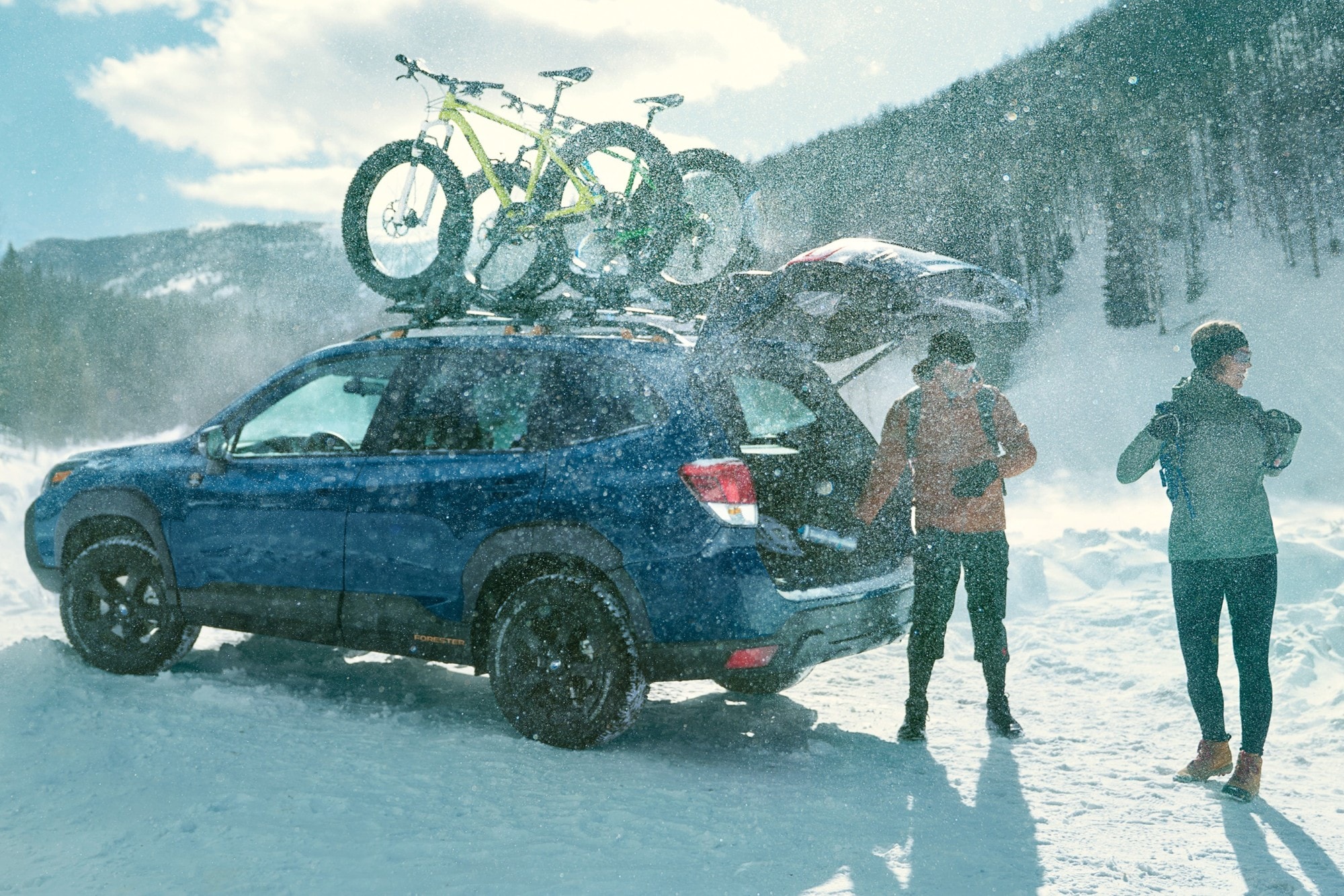
Winter/Snow Tires
Winter or snow tires are specially formulated for areas with significant snow or ice accumulation where temperatures drop below 40°F for a long period. If you live in an area with a lot of snow and experience frigid winters, you may consider switching to a snow tire. Winter tires are designed with softer rubber compounds and deeper tread patterns to enhance grip in cold, snowy, or icy conditions. However, they should be swapped out for all-season or summer tires after winter, as they wear quickly in warmer, dry driving environments.
Why Choose Winter/Snow Tires
- For added traction and enhanced safety in winter
- Enhanced stopping power on icy or snowy roads
- Add studs or chains for additional performance in extreme winter weather

Summer/Performance Tires
Summer tires, also called performance tires, are ideal for warm weather. They offer improved braking, cornering, and traction in high temperatures, making them perfect for dynamic driving and sportier handling.
Why Choose Summer/Performance Tires
- Superior grip in warmer weather
- Enhanced cornering stability
- Stop faster on dry roads
- Sharper, more accurate steering
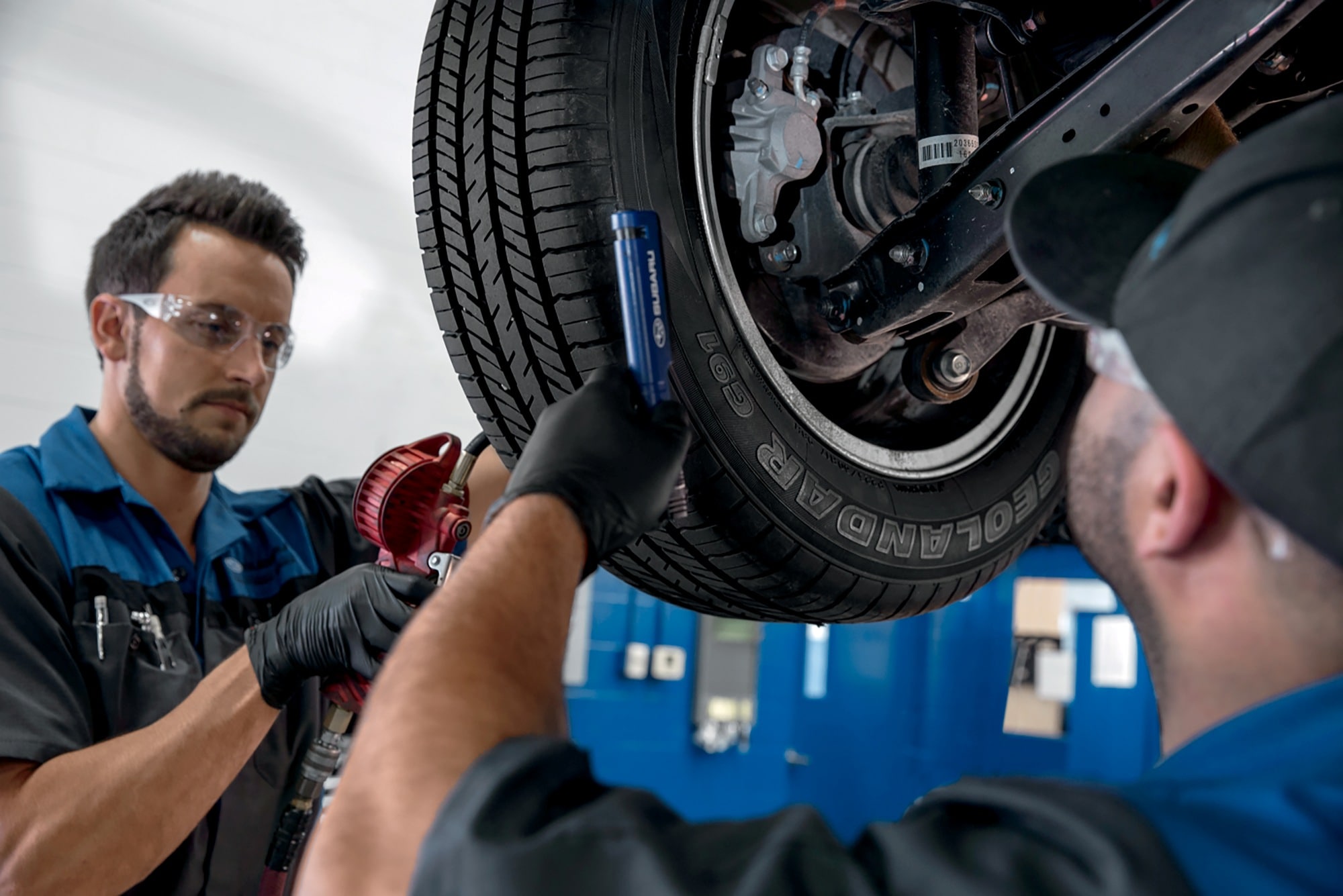
Drive Safely with Subaru Tire Services
When you choose tire services from the professionals in our Subaru Tire Center, you can rest easy knowing that you are getting the best care possible for your vehicle. Contact our team today to learn more about your recommended tire maintenance or to schedule an appointment. We look forward to serving you.
Frequently Asked Questions
Tire rotations are recommended every 5,000 or 6,000 miles (depending on vehicle model) alongside your routine oil change.
Wheel alignments are typically recommended once a year, every 12,000 miles, or after any event that could disrupt alignment—such as an accident, hitting a large pothole, or off-roading.
Subaru tire replacement can vary significantly depending on several variables like the model of the vehicle, driving habits, road conditions, and type of tire, to name a few. It's not uncommon for tires to be recommended for replacement starting around 20,000 miles, going up to 60,000 miles. Tires are typically recommended for replacement at 2/32” of tread depth. If you frequently drive in wet or snowy conditions, replacement will be advised earlier to ensure proper traction and safety.
Yes! Subaru has the MySubaru app, which allows you to track your vehicle maintenance history and upcoming appointments. You can also access the information on the website or by contacting our service advisors in the Service Center.
Wheel alignment adjusts the angles of your vehicle's wheels to ensure they're pointing in the right direction, which helps prevent uneven tire wear and steering issues. Tire balancing, on the other hand, corrects weight imbalances in the wheel and tire assembly to prevent vibrations and ensure a smooth ride. Alignment affects handling and tire life, while balancing affects ride comfort.
It depends on the severity of the damage. You can typically patch a flat if the damage is smaller than a ¼-inch puncture and it's away from the sidewall. Anything larger or close to the sidewall requires a full replacement.
The recommended tire size is in the owner's manual and inside the driver's door jam.
The correct pressure (PSI) is on the same label as the tire size inside the driver's door and in the owner's manual.
Subaru's 24-Month Tire Protection covers:
- Provided by Nation Safe Drivers
- 24-Month tire road hazard coverage
- 100% replacement for all 24 months
- $599 maximum coverage per tire
- Flat tire repair coverage (up to $40/tire per occurrence)
- Complete roadside assistance (includes tire changing, fuel service, lockout service, battery jumping, and 15-mile complimentary towing)
- Roadside assistance can be used multiple times (as long as not within 72 hours)
Helpful Subaru Tire Care Videos
Learn about tire maintenance your Subaru needs throughout the miles to help keep it safely performing at its best.
Checking Tire Pressure
Properly inflated tires are crucial for maintaining fuel economy, tire life, driving performance, and most importantly - safety. Watch this video to learn how to properly check and adjust the pressures in your tires.
Worn Tires
How to identify potentially worn tires on your Subaru and when to see your retailer for service.
Tire Rotation
Learn how routine tire rotations every 6,000 miles on your Subaru helps promote even tread wear and extends the life of your tires.
Wheel Alignment
Traveling over bumps, potholes, and uneven roads can affect the alignment of the wheels on your Subaru through the miles. Learn how to tell if your wheels are out of alignment, and how your local Subaru retailer can help straighten things out.
Wheel Balancing
Tips for how to identify when wheel balancing may be needed on your Subaru, potential issues that can arise from lack of attention and when to see your retailer for service.
Tire Replacement
Tires are important safety and performance components of your Subaru, especially because they're the only parts that actually touch the road. You can help reduce tread wear and extend the life of your tires by checking your tire pressure regularly and having them rotated at the intervals recommended in your Warranty & Maintenance Booklet. And when the time comes for replacement, the Factory Trained Teams at your local Subaru retailer are the best source for the specific tires your vehicle was designed to drive on.
-
Autostar Subaru of Silverthorne
171 W 9th St
Silverthorne, CO 80498
- Sales: (970) 802-6201
Loading Map...


